 USD
USD EUR
EUR
 CAD
CAD
 GBP
GBP
 AUD
AUD
 JPY
JPY



Currently there are
people looking at this design.
Related Designs


We will send you an email to reset your password.
Most cutting boards are put away when the cutting is done. Hinoki Essence was designed to stay out.
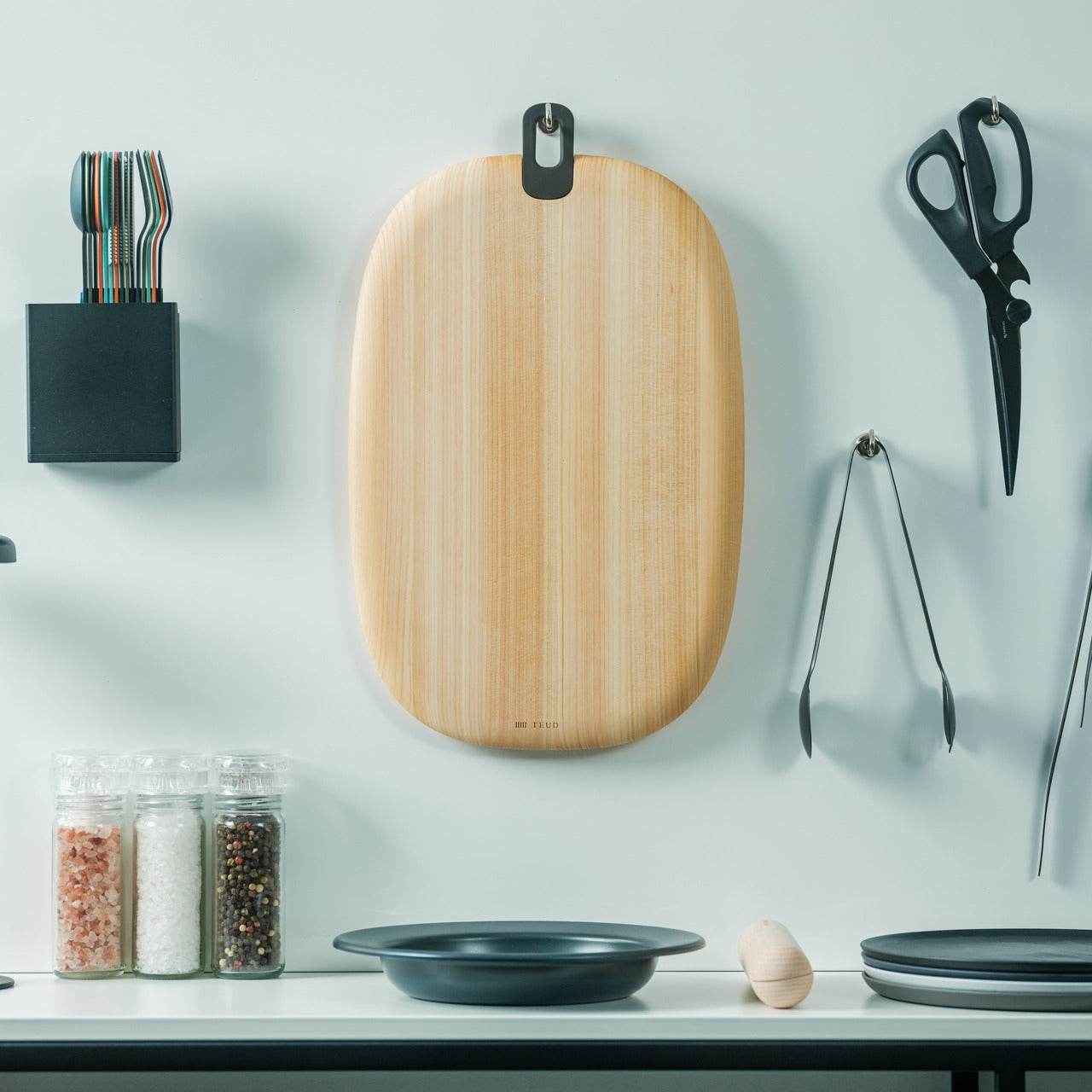
Its rounded hinoki form softens the familiar geometry of a traditional cutting board, while an integrated hook gives it a natural place to hang and dry. What would normally need somewhere to be stored becomes part of the kitchen instead.
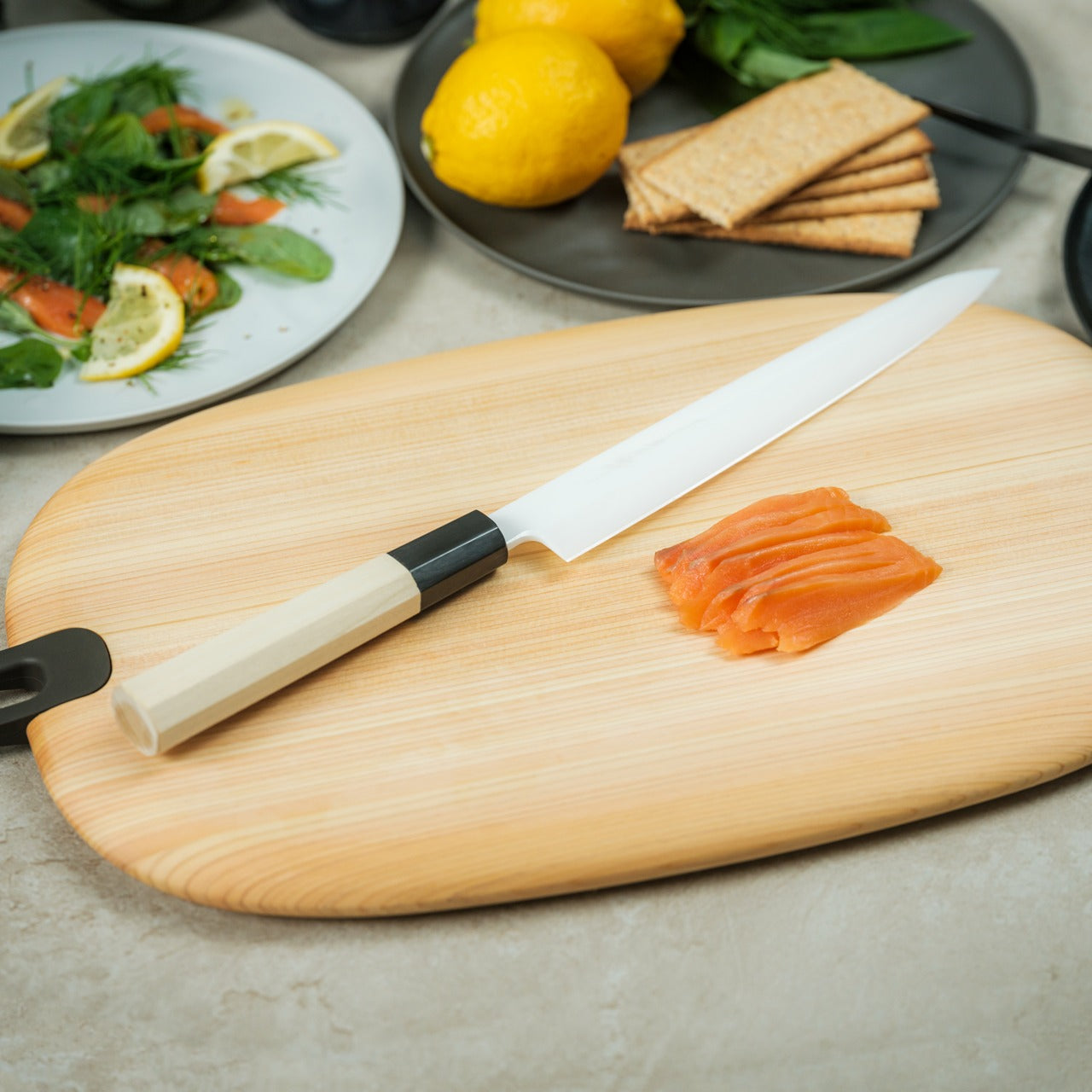
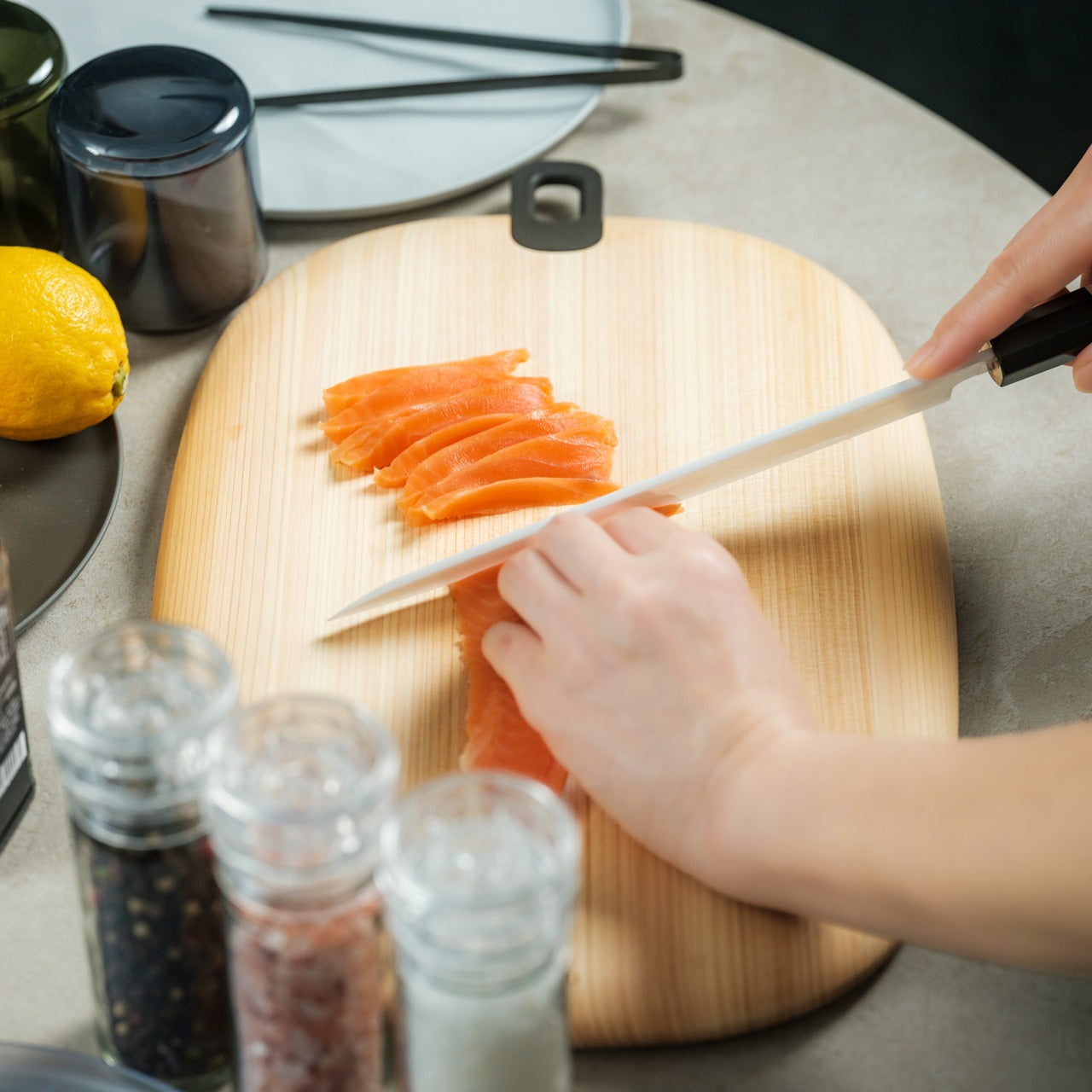
The thinking continues where the knife meets the wood. Japanese hinoki provides a naturally forgiving cutting surface, while a protective silicone treatment helps resist stains, scratches, and everyday moisture.
Some woods are hard enough to be unforgiving on a knife edge. Others are soft enough to mark deeply. Hinoki sits naturally between the two, giving the blade enough resistance for controlled cutting without being unnecessarily hard against the edge.
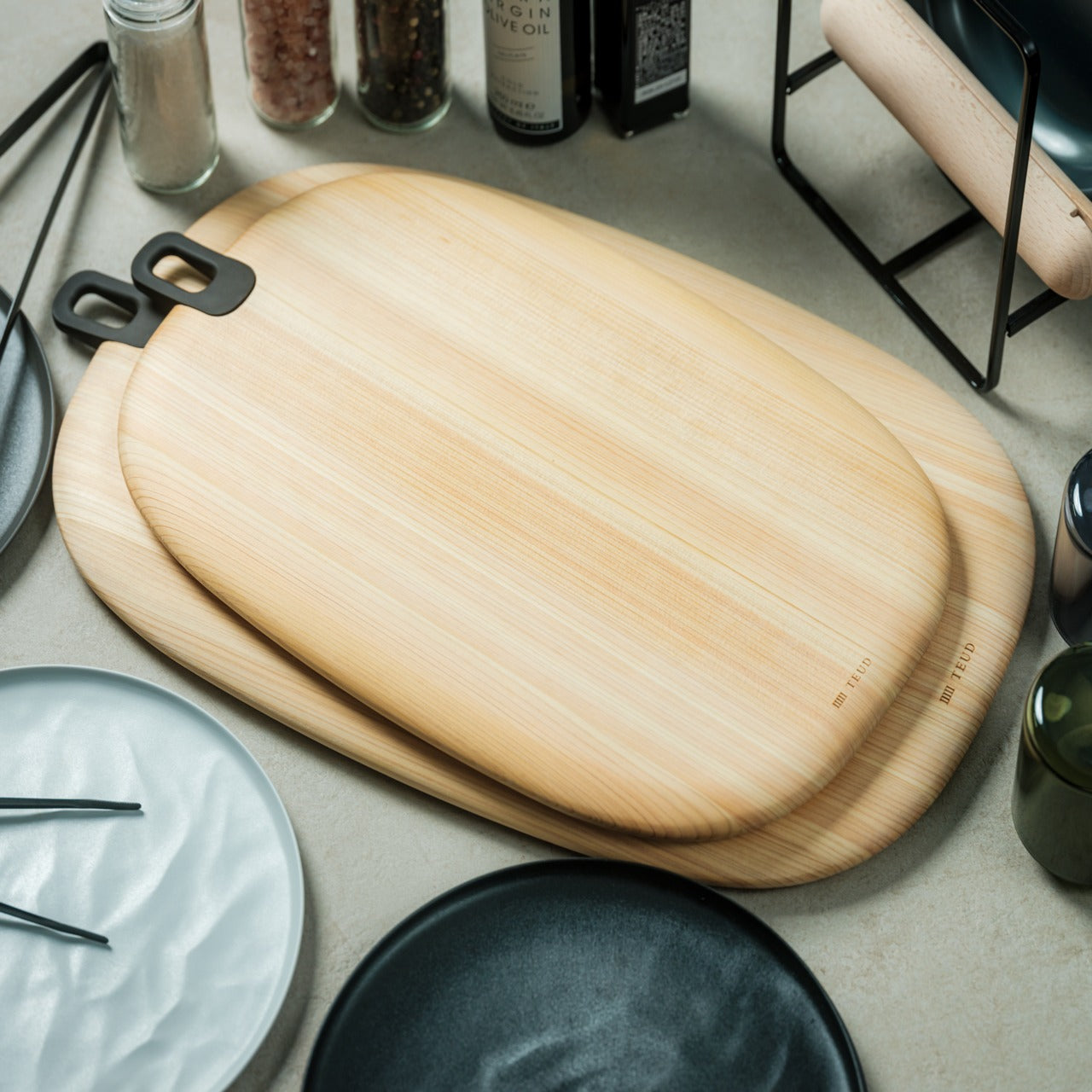
The silicone treatment covers the entire board, allowing either face to be used while helping reduce mold adhesion.
The hook is built into the board itself, giving Hinoki Essence its own place to dry without requiring a separate stand. Once washing is done, hang it vertically and the counter is free again.
The softened corners do more than change the silhouette. Their curved profile helps water drain away rather than collect around the edges, reducing the conditions that can lead to darkening.
But how the board looks between uses matters too. The surface you prepare food on becomes an object you see every day. Hinoki Essence's rounded geometry and uninterrupted grain give that second life the same consideration as the first.
The challenge wasn't to reinvent the cutting board. It was deciding what should change and what shouldn't.
Hinoki already has qualities that make it particularly suited to the job, including a straight grain and a surface that works comfortably against a knife. Design studio METAPHYS kept those qualities at the center of the design while reconsidering what surrounds them: the silhouette, how the board dries, how the wood is protected, and where the board belongs when the cutting is done.
That thinking was developed with Daiwa Sangyo, a Nara manufacturer that has spent more than 50 years producing everyday objects from hinoki and other Japanese woods. Together, the design reflects TEUD's larger idea of reconsidering familiar Japanese wooden tools for the way people live today.
Nara itself is one of Japan's leading hinoki-producing regions, with a history of plantation forestry stretching back more than 500 years. Hinoki grown there is known for its straight grain and pale wood touched with subtle pink tones, allowing the material itself to carry much of Hinoki Essence's visual character.
Take Hinoki Essence down when dinner begins. For the time you're preparing the meal, it belongs on the counter.
When you're finished, wash it and hang it back on the wall. The counter clears, the board dries, and what was a working surface becomes part of the kitchen again.
Tomorrow, take it down and begin again.
Hinoki Essence isn't designed only for the time you spend cutting. It's designed for all the time you don't.